The Last Free Checkout: How to Sleep Wild on Public Lands Without Wrecking Them
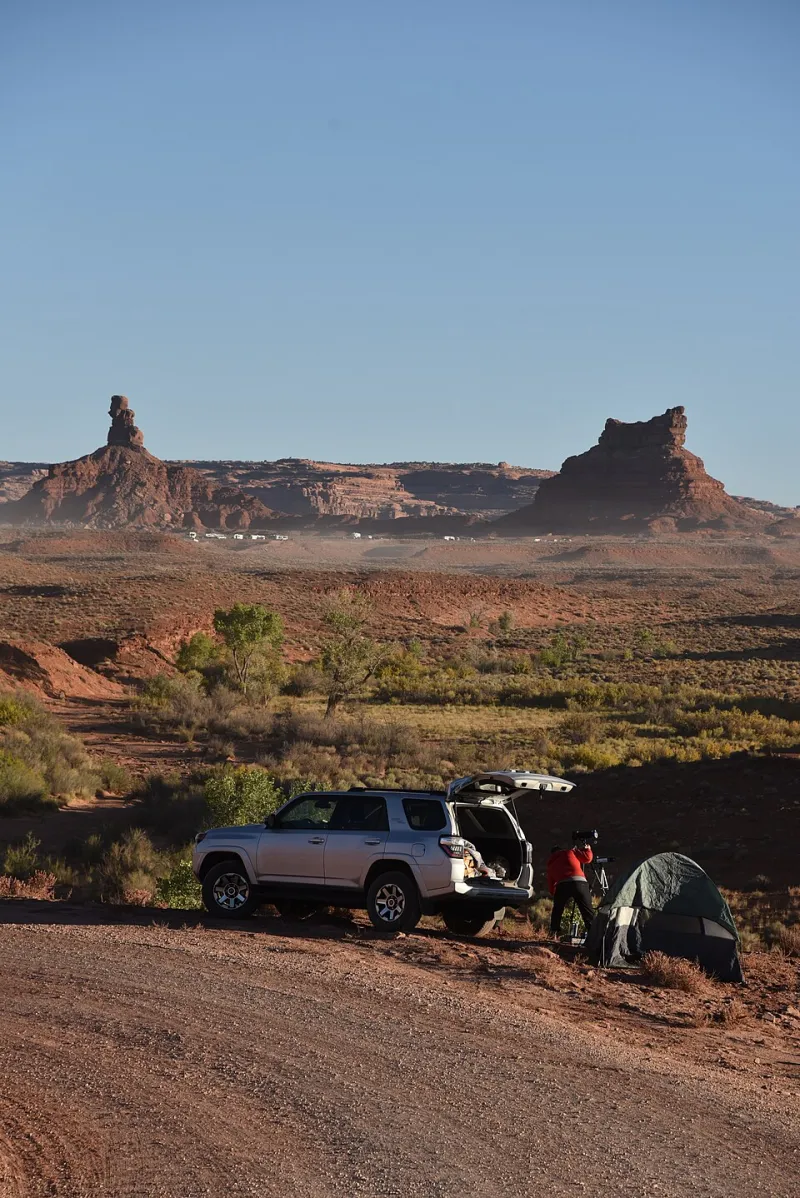
Photo: BLMUtah, Public domain, via Wikimedia Commons
In 2026, a developed campsite near a popular national park can run forty, fifty, even sixty dollars a night, and that is if you managed to book it six months ago. The alternative is not a secret. It is public land, mostly managed by the Bureau of Land Management or the U.S. Forest Service, where you can legally camp for free in the same landscape that costs a fortune next door. The catch is that nobody is going to hold your hand. There is no camp host, no flush toilet, no ranger driving by to make sure you figured it out. That is the deal. You get solitude and savings. You also get responsibility.
What Dispersed Camping Actually Means
Dispersed camping is camping outside of developed campgrounds on public land. It is generally allowed on much BLM land and in many national forests, but it is not allowed everywhere, it is not allowed in national parks, and it is almost never allowed on private or tribal land without explicit permission. The rules change by district, by season, and by fire danger. The 14-day stay limit is common, but so is a seven-day limit in some places. In popular areas, you may need a free permit or you may be pushed into designated sites only. Do not assume. Check.
Find Legal Ground Without Guessing
Start with the agency, not the app. Motor Vehicle Use Maps from the Forest Service show which roads are open to dispersed camping and which are not. BLM district office websites list local rules, closures, and fire restrictions. Then use the apps as a second opinion, not a bible. iOverlander, Campendium, and FreeRoam are useful for finding spots other people have used, but a pin on a map is not a permit. Call the local ranger district if you are unsure. It takes five minutes and it can save you a very expensive ticket.
Look for established pullouts and fire rings. If a spot has clearly been used before, you are probably in the right place. If you are bushwhacking through untouched vegetation to make your own site, you are probably not. In 2026, more land managers are cracking down on user-created sites in sensitive areas, and that is a good thing. The goal is not to find a secret spot. The goal is to use the land in a way that lets the next person use it too.
The 14-Day Shuffle and Other Rules
Stay limits exist for a reason. They prevent any one person from monopolizing a spot and they give the land a chance to recover. When your time is up, move. Not down the road a hundred feet, but far enough to actually reset the clock, usually at least 25 miles in many districts. Pack out everything you brought in, including the things you think will biodegrade. Orange peels are not native to the desert. Neither is your pasta water.
Fire rules are the other big one. Check the fire restriction level before you light anything. In a dry year, a campfire is not a vibe. It is a liability. Use an existing fire ring if there is one, keep the fire small, and put it dead out before you sleep. If there is a fire ban, respect it. The people who ignore fire bans are the reason the rest of us lose access.
Leave It Better, Not Just Leave No Trace
Leave No Trace is the baseline, but the real standard is higher. Pick up trash that is not yours. Bury human waste in a cat hole six to eight inches deep, at least 200 feet from water, and pack out your toilet paper in a wag bag if you are in a high-use or arid area. Do not cut standing trees for firewood. Do not wash dishes in the creek. Do not drive off established roads. Do not fly a drone over wildlife or other campers. The land is not a backdrop for your content. It is a living system, and you are a guest.
Gear That Actually Earns Its Keep
You do not need a $90,000 rig to dispersed camp, but you do need a few things that make the difference between a good night and a bad one. Bring more water than you think you need and a way to carry it. Bring a shovel for cat holes and a wag bag for emergencies. Bring layers, because the desert gets cold at night and the mountains get cold whenever they feel like it. Bring a fire extinguisher if you are cooking with fuel. Bring offline maps, because cell service is a rumor in most of these places. Bring a first aid kit and a headlamp. Bring a small solar setup if you are staying out for more than a night or two, and know how to use it without draining your starter battery.
Safety for Solo Sleepers
Tell someone where you are going and when you expect to check in. Arrive before dark if you can, because finding a spot in the dark is how people end up stuck in a wash or parked somewhere they should not be. Watch the weather. Flash floods in the desert are real and they are fast. Know your wildlife. Know your own limits. If a spot feels wrong, leave. There is no prize for toughing it out in a place that makes your skin crawl.
The Payoff
Dispersed camping is not for everyone. It is dusty, it is inconvenient, and it requires you to be an adult about your own waste. But it is also one of the last places in America where you can pull off the highway, drive a few miles down a dirt road, and sleep under a sky so loud with stars that you forget to check your phone. That is worth protecting. Not just for you, but for the people who will come after you, looking for the same thing.