Mouth Closed, Eyes Wide Open: What Happens When You Stop Talking and Start Truly Seeing

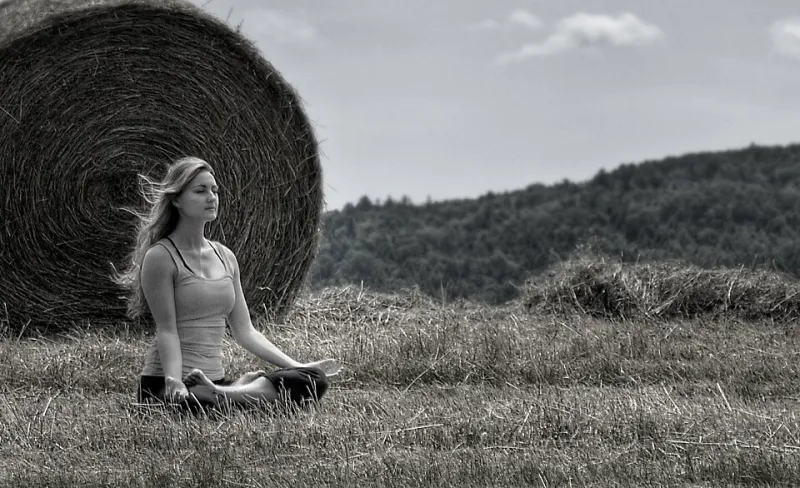
Photo by Photo by leoon liang on Unsplash on Unsplash
Somewhere between Portland and the Oregon coast, a woman named Delia decided to stop talking. Not because she had nothing to say — she had plenty — but because she was tired of the noise she was making inside her own life. She taped a small handwritten sign to the dashboard of her Sprinter van: Silence is my language right now. Thank you for understanding. And then she drove.
For thirty days, she didn't speak a single word.
She wasn't on a formal retreat. She hadn't paid a guru or signed a waiver. She just decided that language — her language, specifically — was getting in the way of something she couldn't quite name yet. And that's exactly the kind of radical, quietly rebellious move that more and more wanderers are making right now.
The Vow Nobody Talks About (Because That's the Point)
Silence as a spiritual practice is ancient. Monks, mystics, and meditators across cultures have long understood that words can be a beautiful cage. Vipassana retreats — ten-day silent meditation intensives that originated in India and now run at centers across the US — have been packed for years, with waitlists that stretch months out. The Noble Silence practiced there isn't just about not speaking. It means no eye contact, no gestures, no writing notes to your neighbor. You are, for all practical purposes, an island.
But the new wave of quiet isn't confined to cushions and meditation halls. It's happening in vans parked at trailheads in Utah. On slow trains through the American Southwest. In rented casitas in New Mexico where the only sound at 6 a.m. is a coyote doing its thing somewhere in the arroyo.
Wanderers are bringing the practice with them — folding it into the journey itself rather than pausing the journey to go be silent somewhere structured.
What Silence Actually Does to You
Here's what nobody tells you about going quiet: the first few days are genuinely uncomfortable. Your brain, accustomed to narrating everything, keeps generating sentences it has nowhere to send. You think in announcements. Look at that cloud. I should mention this to someone. Has anyone else noticed how strange that gas station is?
And then, slowly, the internal broadcast starts to quiet too.
When you're not spending cognitive energy on conversation — not preparing what to say, not replaying what you said, not smoothing over the awkward thing you said three hours ago — something opens up. Attention sharpens. Colors look more saturated. You notice the way light moves across a canyon wall for a full twenty minutes without checking your phone once.
Travelers who've done extended silences describe it as a kind of recalibration. Like getting your hearing checked and realizing you'd been living with half the bandwidth this whole time.
The Unexpected Social Magic
Here's the counterintuitive part: silence doesn't isolate you from the people around you. Often, it does the opposite.
When you can't talk, you become a much more careful observer of other humans. You notice body language with a precision that conversation usually drowns out. You make genuine eye contact — the sustained, unhurried kind — because it's one of the few tools you have left. And people, sensing that quality of attention, often respond to it.
Delia, the woman in the van, kept a journal during her silent month. She wrote that strangers in small coastal towns would sit beside her at diners and just... talk. Really talk. Without her filling in gaps or redirecting, conversations would go somewhere unexpected. "I became a really good listener," she wrote, "because I had no other option."
There's something almost ethnographic about moving through a place without speaking. You stop performing your personality. You stop being a tourist who asks the charming questions and starts being something closer to a witness.
Silence as a Cultural Bridge
For travelers moving through communities where they don't share a language, a vow of silence levels the playing field in a strange and beautiful way. You're already operating without words — you might as well commit to it.
In parts of Southeast Asia, Central America, and Indigenous communities across the American West, silence carries social weight that most loud American travelers completely miss. Rushing to fill quiet with chatter is, in many cultural contexts, a sign of discomfort or disrespect. Sitting with someone in easy silence is intimacy. It's trust.
When you're not frantically searching for the right phrase in a language you don't speak, you start communicating in ways that actually work across borders: gesture, expression, presence, patience. A shared meal eaten quietly together can say more than a hundred words of broken translation.
How to Try It Without Going Full Monk
You don't need to commit to thirty days or book a ten-day Vipassana to test this out. The practice scales beautifully.
Start with a silent morning. Wake up before whoever you're traveling with and spend the first two hours of the day without speaking. No podcasts, no phone calls, no narrating your breakfast plans. Just coffee and whatever is happening outside the window.
Or try what some van lifers call a "quiet day" — one full day per week on the road where you simply don't talk. Carry a small notepad for genuine emergencies. Let yourself be a little weird about it. See what you notice.
If you're solo, the practice is even more accessible. You're already not talking to anyone — the shift is internal. Silence becomes about what you choose not to say to yourself, which is honestly the harder and more interesting frontier.
The Gypsy Logic of Going Quiet
There's something deeply on-brand about this movement for anyone who's ever felt the pull toward a less cluttered life. We talk a lot, in the van life and travel communities, about stripping things down. Fewer possessions. Smaller footprints. Simpler routines. Silence is just that logic applied to sound.
What do you actually need? What are you carrying that isn't serving you? Sometimes the answer is the constant performance of yourself through language.
The road has always been a place where you can reinvent what you require. People have been shedding zip codes, careers, and square footage for years in pursuit of something realer. Why not shed the chatter too — at least for a little while?
Delia eventually started talking again. Gradually, carefully, like someone who'd been given a new instrument and wanted to play it better than before. She said the month of quiet didn't make her antisocial. It made her more selective. More honest. Less afraid of the pauses.
"I used to fill every silence like it was a hole," she told a friend, weeks after the sign came down from her dashboard. "Now I know that sometimes the hole is the whole point."
Go quiet. See what finds you.