Neon, No-Tell, and Noteworthy: The Bohemian Case for Checking Into the American Motel
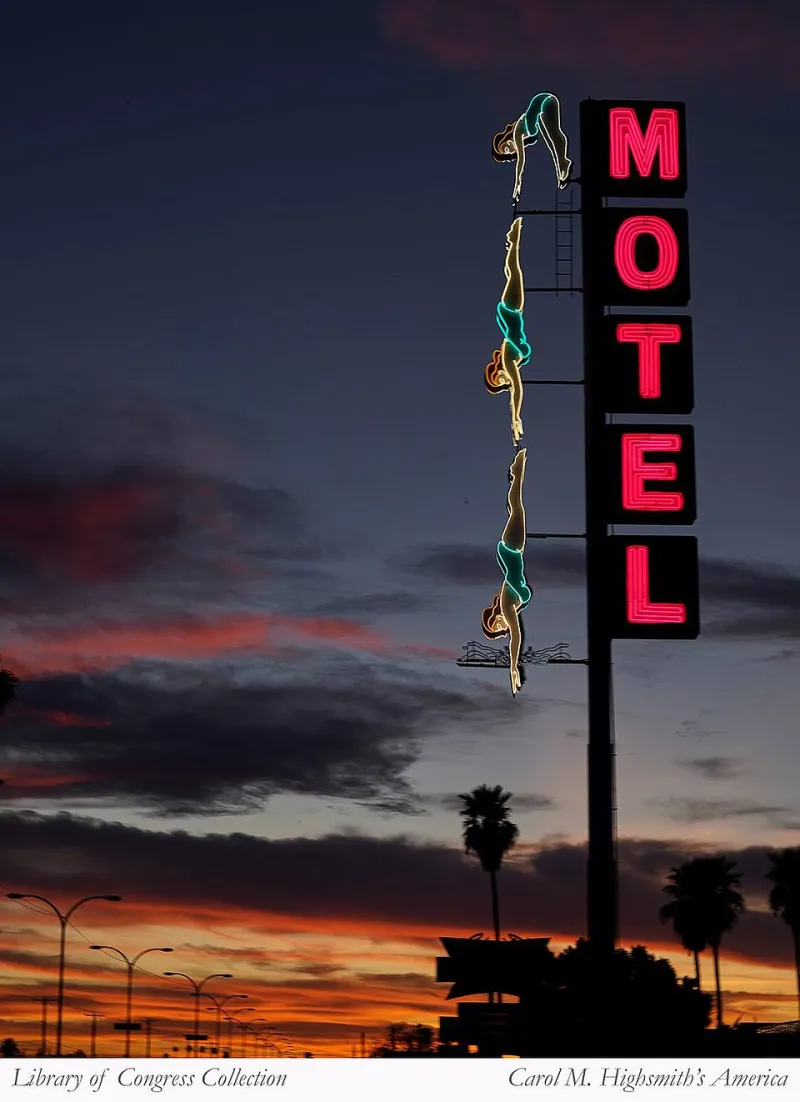
Photo: Carol M. Highsmith, CC BY-SA 4.0, via Wikimedia Commons
There is a particular hour on the American highway when the neon starts to hum. The sun has dropped behind a row of cottonwoods, the gas gauge is flirting with empty, and up ahead a sign blinks VACANCY like it means it. You pull in. The office smells like carpet shampoo and old coffee. A person behind the counter hands you a real key on a plastic diamond. This is not a boutique hotel. It is a motel, and for a certain kind of wanderer, it is the most honest room in America.
In 2026, the travel industry loves to sell us sameness: the same beige lobby, the same pump bottles, the same breakfast trough of scrambled eggs. The motel offers something else. Character, yes, but also permission. Permission to arrive dusty. Permission to stay one night. Permission to be a stranger in a place that never pretends to be your home. That is why bohemians are checking back in.
A Short, Glorious History of the Motor Court
After World War II, America fell hard for the car. Motor courts sprouted along the new highways like wildflowers, each one competing for the attention of families with station wagons and soldiers with savings. They were family-run, affordable, and deeply local. Signs were hand-painted or bent into atomic shapes. Pools were kidney-shaped. Rooms had doors that opened straight onto the parking lot, which meant you could carry a sleeping child or a wet dog or a guitar amp inside without marching through a marble lobby.
Then came the interstates, and the bypassed towns, and the chain hotels with their loyalty programs. Some motels died. Some became long-term housing. Some held on, repainted by the same family that opened them decades ago. The form survived because it solved a simple problem: a traveler needs a bed, a shower, a door, and a place to park. Everything else is theater.
Why Wanderers Are Rediscovering the Vacancy Sign
The motel is having a moment because it refuses to perform luxury. You do not need a resort wardrobe to walk from your car to your room. You do not need to pretend you are having a wellness experience. You can be road-weary, sunburned, and halfway through a bag of gas-station peanuts, and the motel will still take you in.
There is also the matter of money. A cheap room is not a compromise if it buys you another day on the road. The bohemian math is simple: spend less on the box you sleep in, spend more on the places you go. A $79 motel room in a small town can fund a museum ticket, a hot spring soak, or a very good plate of green chile. The motel becomes a base camp, not the destination.
And then there is the beauty of the thing itself. Neon is public art. A hand-lettered sign is a human voice. A courtyard with plastic chairs and a struggling rosebush is a living room for strangers. When you stay at a family-run motel, you are not just buying a night. You are casting a small vote for a stubborn, imperfect, deeply American way of moving through the world.
How to Tell a Gem From a Dump
The romantic in me wants to say you can feel it in your bones. The practical traveler says check the reviews first. Read the recent ones, not the ancient ones. Look for repeated words like smell, dirty, unsafe, or bugs. Ignore the generic complaints about dated decor. Dated is not the same as dirty. Dated is the point.
When you arrive, look for signs of care. Is the owner on site? Is the parking lot swept? Are there plants, or a hand-painted sign, or a guest book with actual handwriting? Does the desk clerk answer questions without sighing? Ask to see the room before you pay if the vibe is uncertain. A good motel will show you. A bad one will act like you have insulted its honor.
Inside, check the basics: locks, smoke detector, bathroom, mattress, outlets, and the smell. Trust your gut. A dump feels chaotic. A gem feels tended. Bring earplugs, a sleep mask, flip-flops for the bathroom, and your own pillowcase if you are picky. Be kind to the person at the desk. They are the keeper of the ice machine and the local knowledge. If the room is truly bad, leave. Bohemian does not mean unsafe or miserable.
Four Roadside Stays Worth the Detour
- Blue Swallow Motel, Tucumcari, New Mexico. A Route 66 icon with neon that still glows, courtyard garages, and rooms that feel like a mid-century postcard. It is the Platonic ideal of the American motel.
- Wigwam Motel, Holbrook, Arizona. Sleep inside a concrete tipi. It is strange, historic, and exactly the kind of place that makes a road trip memorable.
- The Shady Dell, Bisbee, Arizona. A collection of vintage trailers and period-perfect details. It is less a motel than a time capsule with a sense of humor.
- Joshua Tree Inn, Joshua Tree, California. A desert hideout with bohemian bones and a musical ghost story. It is the kind of place where you leave the curtains open for the moon.
The Bohemian Math of a $79 Room
The motel is a muse because it asks almost nothing of you. It does not want you to be a brand. It does not want your whole week. It wants one night, maybe two, and a little respect for the carpet. In return, it gives you a door, a bed, a neon sign, and the feeling that the road is still full of places that have not been smoothed into sameness.
So the next time you see that blinking VACANCY, do not just drive past. Pull in. Ask for a room. Put the kettle on the nightstand. Listen to the ice machine settle. The American motel is not a compromise. It is a secret handshake, and you are invited.