Leave It Behind: The Beautiful Ritual of Building Sacred Spaces You'll Never See Again
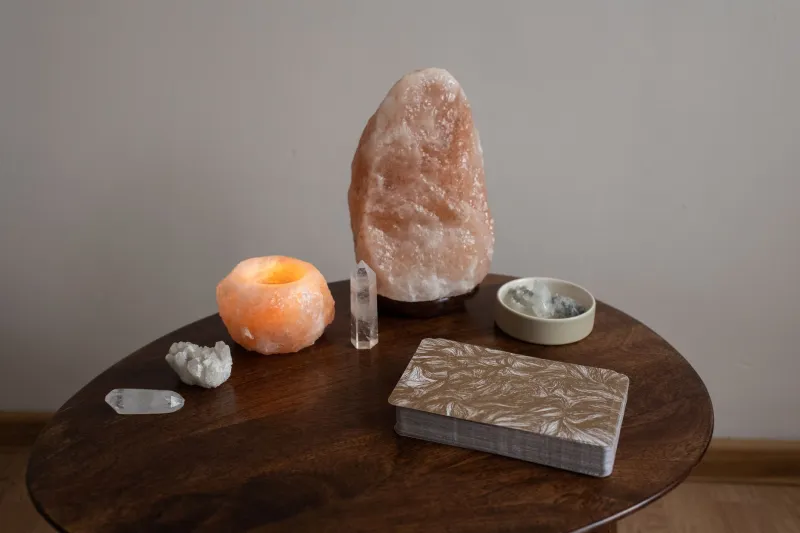
There's a woman in Taos, New Mexico who carries a small canvas pouch stuffed with river stones, a stub of palo santo, a folded photograph, and a single brass candleholder she found at a flea market in Flagstaff. Every time she lands somewhere new — a rented casita, a friend's pull-out couch, a camp spot off a Forest Service road — she finds a corner, clears a surface, and builds a small altar before she unpacks anything else.
By morning, most of those altars are gone. Dismantled, folded back into the pouch, ready for the next place. The stones don't remember the shelf they sat on. The candle doesn't mourn the windowsill. And somehow, neither does she.
This is the quiet spiritual revolution happening at the edges of nomadic culture — and it's a lot more profound than a pretty arrangement of crystals on a bedside table.
What Even Is a Traveling Altar?
The concept of a portable sacred space isn't new. Indigenous cultures across the Americas have long understood that ritual doesn't require a fixed address. Medicine bundles, prayer ties, portable shrines — the idea that the sacred travels with you, rather than waiting for you somewhere permanent, is ancient. What's new is the way modern wanderers are consciously reclaiming this practice as a form of psychological and spiritual anchoring.
A traveling altar can be almost anything. A windowsill arrangement of shells and a small candle. A circle of found objects — a pinecone, a feather, a coin from a city you passed through — laid out on the floor of a van before sleep. A corner of a motel dresser cleared of the TV remote and the laminated breakfast menu, replaced for one night with a photograph of someone you love and a small plant cutting in a mason jar.
The point isn't the objects. The point is the act.
The Meditation Hidden in Making Something Temporary
Here's what's counterintuitive about this practice: building something you know you'll take apart should feel futile. Our culture is obsessed with permanence — with owning things, with leaving marks, with staying. We build equity. We frame photos. We carve initials into trees. The idea of putting real intention into something that will be gone in twelve hours runs against almost every instinct we've been socialized to have.
And that's exactly why it works.
When you sit down to arrange a small altar in a space you're borrowing, you're forced into the present tense in a way that almost nothing else demands. You're not thinking about the next stop. You're not scrolling. You're choosing which stone goes where, deciding whether the candle should face east, noticing the quality of light coming through a window you'll never look through again. You're fully, completely here — in a space that isn't yours, making it sacred anyway.
That's not loss. That's liberation.
Belonging Without Owning
One of the deepest fears that keeps people from embracing nomadic life — or from finding peace within it once they've started — is the fear of not belonging anywhere. Home, in the American cultural imagination, is a fixed coordinate. It's an address. It's a key on a ring. Without that, the story goes, you're unmoored.
But the wanderers quietly building altars in Airbnbs and national park campsites and rest stop parking lots are writing a different story. They're discovering that belonging isn't about where you are — it's about whether you show up fully to wherever you are.
When you take ten minutes to create a sacred corner in a space, you're not just decorating. You're saying: I am here. This moment matters. This place, however briefly, is real. That act of witness — of marking a space with intention rather than ownership — turns out to be its own form of rootedness. Not the kind that keeps you in one place, but the kind that keeps you in yourself.
What Nomads Are Actually Carrying
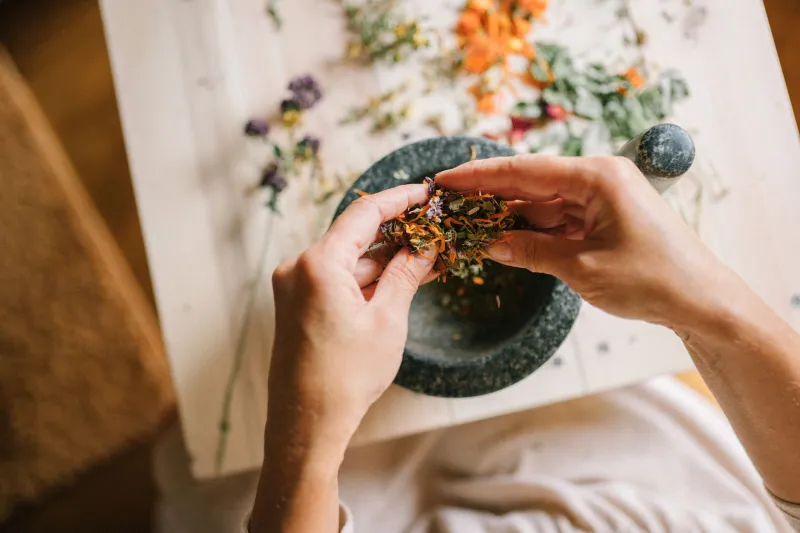
Talk to people who practice this long enough, and you start to notice patterns in what they carry. Almost everyone has something small and heavy with memory — a stone from a meaningful place, a piece of jewelry that belonged to someone gone, a token from a moment of transformation. Almost everyone has something that produces light: a candle, a small lamp, sometimes just a string of battery-powered lights. And almost everyone has something living, or recently living — a plant clipping, dried flowers, a feather, a seed.
These aren't random. Light, memory, and life. That's the altar kit, stripped to its bones. And it fits in a pouch you can shove into a backpack pocket.
Some people add ritual objects specific to their spiritual practice — tarot cards, a small deity figure, a prayer bead strand. Others keep it entirely secular, more about mindfulness than mysticism. Both work. The theology is optional. The intention is everything.
Roadside Altars and the American Landscape
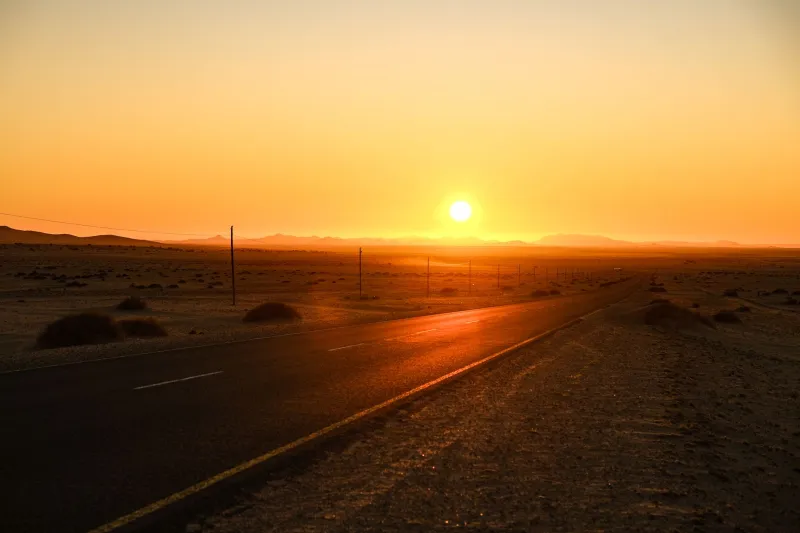
There's another version of this practice that's more public, more ephemeral, and arguably more radical: the roadside altar. You've seen them on American highways your whole life — flowers zip-tied to a guardrail, a small cross planted in the median, photographs weathering in the sun. These are grief altars, traditionally. Markers of where someone was lost.
But a growing number of nomads are building a different kind of roadside altar — not to mourn, but to celebrate. A stack of stones at a trailhead. A small arrangement left at the base of a Joshua tree. Shells placed in a circle at a beach where something shifted inside them. These aren't meant to be permanent. The wind will scatter them. A park ranger will clear them. Another traveler will find them and wonder.
That wondering is the point. Someone was here. Someone felt something. Someone left a mark that says this place is holy — and then kept moving.
How to Start, Even If You've Never Done Anything Like This
You don't need a spiritual framework to try this. You don't need crystals or incense or a particular belief system. You just need to arrive somewhere and, before you do anything else, ask: What would make this space feel like mine for tonight?
Maybe it's moving the furniture two feet to the left. Maybe it's opening the window and putting something you love on the sill. Maybe it's just lighting a candle and sitting with it for five minutes before you check your phone.
The altar is whatever tells your nervous system: we are here, we are safe, this is sacred ground — even if sacred ground tonight is a Motel 6 off I-40 in Amarillo.
Build it. Sleep in it. Leave it behind.
That's not loss. That's the whole practice.
The sleeping gypsy doesn't need a permanent temple. She carries the sacred with her, sets it down wherever she lands, and trusts that the leaving is just as holy as the building.