Gloriously Unstimulated: How Doing Nothing Became the Most Radical Thing in My Wandering Life
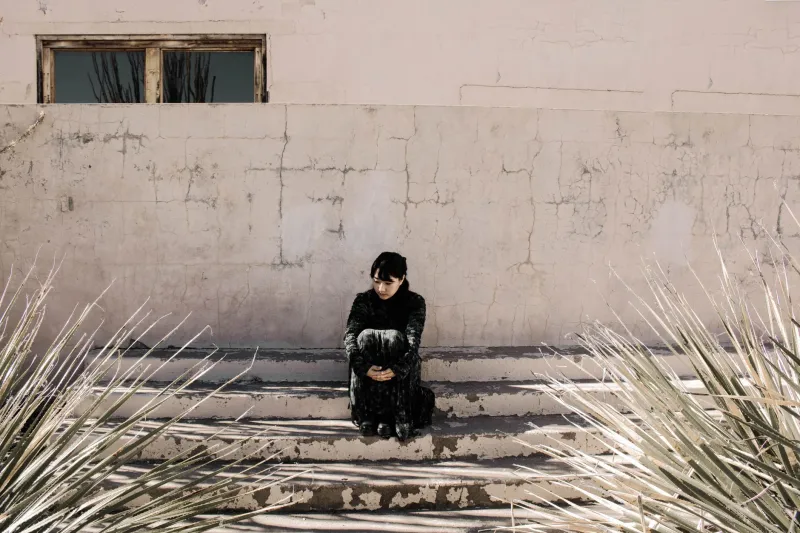
There's a particular kind of afternoon I've come to crave more than almost anything else on the road. No podcast queued up. No novel dog-eared on the passenger seat. No scenic overlook marked with a pin. Just me, a patch of grass or a dusty curb or a sun-warmed hood of a van, and an hour that belongs entirely to the void.
People look at you funny when you describe it. "But what do you do?" they ask, genuinely confused, the way you might react to someone describing a meal with no ingredients. The honest answer is: not much. And that, it turns out, is the whole point.
The Productivity Cult Has a Stranglehold on Wanderers Too
Here's the uncomfortable truth nobody in the van life or nomad community likes to say out loud: we are not immune to hustle culture. We traded the cubicle for the open road, sure, but a lot of us just packed our optimization obsession into a 70-liter backpack and brought it along for the ride.
We fill drives with educational podcasts. We journal productively. We monetize the journey on Instagram before the dust settles. Even our rest gets scheduled and purposeful — yoga at sunrise, meditation with an app, breathwork with a timer. Every moment of downtime gets quietly colonized by self-improvement.
Which is why a growing number of unconventional travelers are doing something that feels almost transgressive in 2024: they're scheduling time to be genuinely, unambiguously bored.
Not meditating. Not manifesting. Not even thinking, really. Just... existing in the open air of an empty hour.
What's Actually Happening in Your Brain When You Check Out
Neuroscientists have a name for the mental state that kicks in when you stop directing your attention at anything specific. They call it the default mode network — a web of brain regions that hums to life precisely when you stop trying to be productive. For a long time, researchers thought this network was basically idling. Background noise. The brain's screensaver.
They were wrong.
It turns out the default mode network is where some of your most sophisticated cognitive work happens. It's the engine behind creative insight, emotional processing, memory consolidation, and the kind of big-picture thinking that never surfaces when you're grinding through a task list. Daydreaming, it turns out, is not a waste of time. It's the brain doing its deepest, most integrative work — the stuff that can't happen while you're consuming content or chasing a goal.
The catch? You have to actually stop to get there. Scrolling doesn't count. Neither does listening to ambient music with an intention to relax. The default mode network needs genuine unstructured space to fully activate. It needs, in a word, boredom.
The Nomads Who've Made Nothing a Ritual
Spend enough time in the wandering community and you start meeting people who've figured this out, often by accident.
There's Dani, a 34-year-old who's been living out of a converted Sprinter van since 2020, currently parked somewhere in the high desert outside of Taos, New Mexico. She calls her daily practice "the blank hour" — sixty minutes every afternoon where she sits outside with no phone, no book, no agenda. She doesn't even bring water, because having water means having a reason to sip it, and sipping is a small act of doing.
"The first few weeks I tried it, I thought I was going to crawl out of my skin," she says. "My brain kept generating to-do lists. I'd remember emails I needed to send, routes I should plan, content I could be creating. It felt like withdrawal."
That's because it kind of is. Constant stimulation rewires your brain's reward circuitry. Boredom, in the early stages, genuinely feels like deprivation — because you've trained yourself to expect a steady drip of input. Sitting with the discomfort is the practice.
After about three weeks, Dani says something shifted. "The lists stopped coming. I started noticing things — not in a mindfulness, be present kind of way. Just... noticing. The way a shadow moved. A sound I couldn't identify. Ideas that had nothing to do with anything useful. It felt like my brain finally exhaled."
She credits her blank hour with some of the clearest creative thinking she's ever experienced, and with a general loosening of the low-grade anxiety that had followed her from her old life in Chicago.
Boredom as Bohemian Resistance
There's a reason this practice resonates so deeply with people living outside the mainstream. Bohemian culture has always been, at its core, a refusal — a refusal to let market logic dictate the shape of a life. The original bohemians weren't just artistic; they were anti-utilitarian. They insisted that beauty, idleness, and wandering were valid ends in themselves, not means to a productive outcome.
Sacred boredom is an extension of that lineage. When you carve out time to do absolutely nothing, you're making a philosophical statement: your existence doesn't have to justify itself. You don't have to optimize. You don't have to produce. You're allowed to simply be a creature sitting in the afternoon light, going nowhere in particular.
In an attention economy designed to colonize every idle second, that's a genuinely radical act.
How to Actually Practice Doing Nothing (Without Cheating)
This sounds easier than it is. Here are a few honest guidelines from people who've built boredom rituals into their wandering lives:
Leave the phone somewhere inconvenient. Not just face-down beside you — actually put it inside the van, or in your bag, or somewhere that requires a deliberate effort to retrieve. Out of arm's reach changes everything.
Don't give it a purpose. The moment you decide your boredom session is for "creative inspiration" or "stress relief," you've turned it into a task. Let it be purposeless. That's the whole deal.
Start small. Twenty minutes of genuine nothing is harder than it sounds. You don't need to begin with an hour. Even ten minutes of unstructured, unstimulated sitting is a meaningful start.
Resist the urge to narrate. Journaling about your boredom immediately afterward is fine, but don't spend the time mentally composing what you'll write. Let the experience be experience, not content.
Go outside if you can. There's something about an outdoor environment — even a parking lot, even a rest stop on I-40 — that makes genuine idleness feel more natural. The sky is good at reminding you that most of existence isn't optimizing anything.
The Quiet Reward at the End of Nothing
I won't tell you that sacred boredom will change your life in some dramatic, quantifiable way. That would be missing the point entirely. The reward isn't a productivity boost or a creativity unlock, even if those things sometimes show up as side effects.
The reward is subtler and stranger than that. It's the feeling of having given yourself back to yourself, if only for an hour. Of having refused, in the quietest possible way, to be useful.
The road has a way of teaching you that the most important miles are sometimes the ones you spend perfectly still. That the deepest kind of wandering happens when you stop moving altogether and let your mind drift out past the edges of what you can plan or produce or post.
That's the sleeping gypsy in the name, maybe — not someone who's given up, but someone who knows when to close their eyes and let the world keep spinning without their help for a while.
Sometimes the wildest thing you can do is sit down, shut up, and let the afternoon be absolutely, gloriously empty.