Roots, Bark, and Wandering Hands: Why Nomads Are Turning to Plant Medicine on the Road
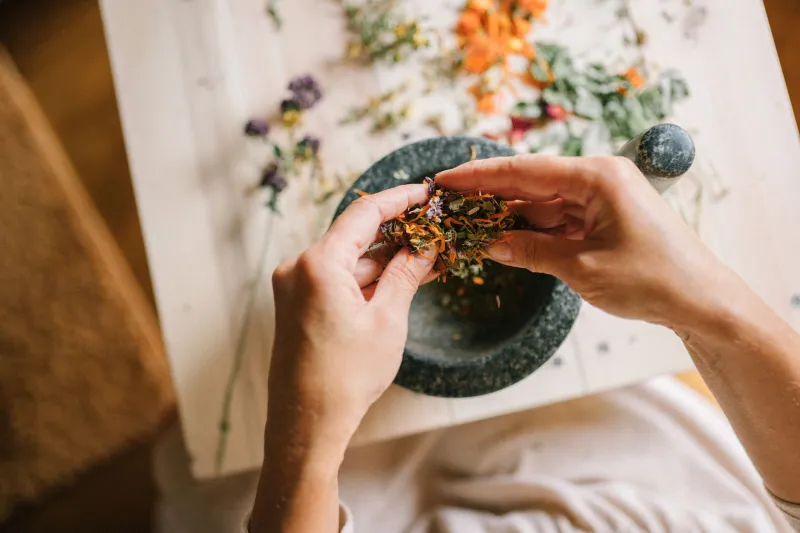
Somewhere between a dusty New Mexico highway and a campsite outside Taos, Maya — a full-time van dweller and herbalist — brews a cup of osha root tea and tells me she hasn't owned a bottle of NyQuil in four years. "I used to panic every time I felt something coming on," she says, cradling a chipped enamel mug. "Now I just reach into my kit."
That kit, a hand-sewn canvas pouch tucked behind her driver's seat, holds dried elderberries, a small tin of calendula salve, a bundle of dried yarrow, and a few other earthy essentials that she's accumulated through trade, foraging, and small-batch herbalists she's met at markets and festivals across the country. It's a traveling pharmacy that smells like a forest floor, and to Maya, it represents something far bigger than just a cold remedy.
It represents freedom.
The Ancient Roots of a Very Modern Movement
Herbal medicine isn't new. It's arguably the oldest form of healing on the planet, practiced across every culture long before pharmaceutical companies existed. Romani communities — the original wanderers that so much of bohemian culture draws inspiration from — carried deep, generational knowledge of plant medicine, using local flora to treat everything from fevers to wounds to heartache.
What is new is the way contemporary nomads, van lifers, and free-spirited travelers are actively reclaiming that knowledge. In an era when a single urgent care visit can cost hundreds of dollars without good insurance, and when many road-dwellers are specifically opting out of conventional systems, the appeal of a dried herb that costs three dollars and actually works is not hard to understand.
"There's a real autonomy piece to this," says Drea Callahan, a community herbalist based in Asheville, North Carolina, who regularly teaches plant medicine workshops at intentional communities and nomadic gatherings. "People living unconventionally often feel like the mainstream healthcare system wasn't built for them — and honestly? For a lot of them, it wasn't. Herbal medicine gives them agency over their own bodies."
What's Actually in the Nomad's Kit
Ask a dozen road-dwellers what they carry, and you'll get a dozen variations on a core list of workhorses. A few keep showing up again and again.
Elderberry is practically the patron saint of van life cold season. Syrup made from Sambucus nigra berries has solid research behind it for reducing the duration of respiratory illness, and you can make a big batch, jar it, and keep it refrigerated in a 12-volt cooler for weeks.
Yarrow (Achillea millefolium) is the road tripper's wound care. Applied topically to minor cuts and scrapes, it helps stop bleeding and has natural antimicrobial properties. It also works as a fever-breaking tea when you're sweating through a night in the back of a Sprinter somewhere in the Ozarks.
Calendula shows up in salves, oils, and tinctures. Skin that takes a beating from sun, wind, and sleeping on questionable surfaces responds gratefully to calendula. It's gentle, it's effective, and it grows almost anywhere — some nomads even grow it in window boxes mounted to their rigs.
Ashwagandha has found a devoted following among travelers dealing with the slow, grinding stress of uncertain income and irregular sleep. As an adaptogen, it doesn't knock you out or wire you up — it just quietly helps your nervous system find its footing. Many nomads take it as a daily tincture.
Ginger root is the universal digestive fix. New water, new food, new altitude — your gut is constantly adjusting on the road, and fresh or dried ginger handles nausea, bloating, and general digestive rebellion with impressive reliability.
Learning the Language of Plants
Of course, none of this works if you don't know what you're doing. And herbal practitioners are quick to point out that the romanticization of plant medicine can sometimes outpace the actual knowledge people carry.
"Plants are powerful," says Drea. "That's the whole point. Which means they can also interact with medications, or be contraindicated for certain conditions. The movement toward herbal autonomy is beautiful, but it needs to be paired with real education, not just vibes."
For nomads wanting to go deeper, the resources are out there. The American Herbalists Guild maintains a directory of trained practitioners across the country. Books like Rosemary Gladstar's Medicinal Herbs and Matthew Wood's work on plant energetics have become road-worn staples in many vans. And the nomadic community itself — at gatherings like Rainbow Family events, Rubber Tramp Rendezvous, or countless regional festivals — is a living library of passed-down knowledge.
Some nomads take formal courses online through programs like the Herbal Academy, earning certifications while parked at desert campsites with spotty signal and enormous ambition. Others learn the old-fashioned way: through mentorship, through trial and error, through sitting with someone who knows more than they do and paying close attention.
The Bigger Picture
There's something quietly radical about a person choosing to understand their own body on their own terms. In a culture that has largely outsourced healing to institutions, reclaiming even a small part of that relationship — knowing that yarrow will slow a bleed, that osha root will open congested lungs, that lemon balm tea will ease an anxious mind — is a kind of sovereignty.
For nomads, who have already made the choice to step outside conventional structures in so many other ways, plant medicine fits naturally into a larger philosophy. It's local when possible, low-waste by nature, deeply connected to the land they're moving through, and entirely their own.
Maya finishes her osha tea and sets the mug on the dash. Outside, the high desert stretches in every direction, scrubby and windswept and full of things that heal.
"I'm not anti-doctor," she says, watching a hawk trace a slow circle overhead. "I go when I need to. But I love knowing that most days, I've got what I need right here."
She pats the canvas pouch and starts the engine.
As always, consult a qualified healthcare provider for serious medical concerns. Herbal remedies are a complement to — not a replacement for — professional medical care when it's needed.