Midnight Is When the Magic Clocks In: The Nocturnal Creative's Secret Hours
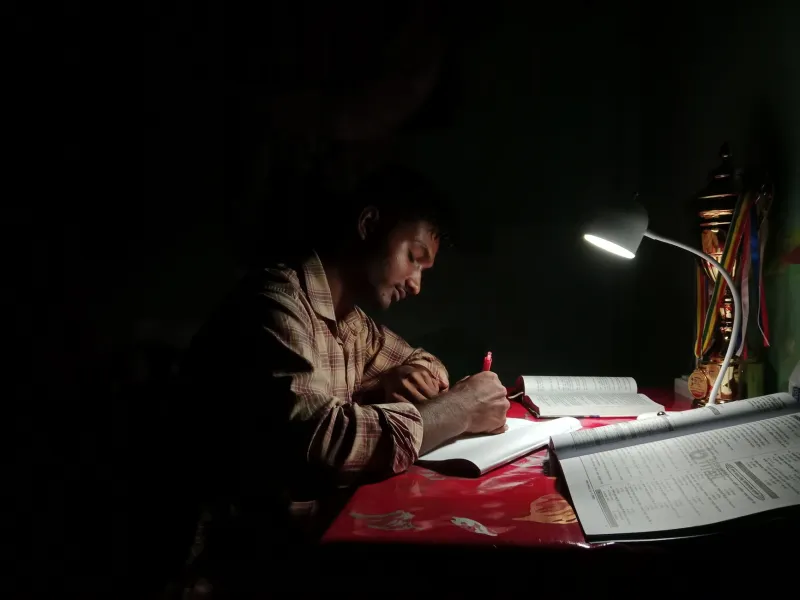
There's a particular quality to 2 a.m. that no other hour owns. The notifications have gone quiet. The group chats have finally stopped. The ambient noise of everyone else's ambitions — their podcasts, their productivity hacks, their morning routines — has dissolved into something you can actually hear: your own mind, doing its thing.
For a certain kind of wanderer, maker, and free-thinker, that silence isn't emptiness. It's an invitation.
We've been sold hard on the gospel of early rising. Rise at five, journal before sunrise, cold plunge, meditate, manifest. And sure, that works beautifully for some people. But for a significant and historically distinguished slice of humanity, the creative engine doesn't warm up until the rest of the world has gone to sleep. And it's time we stopped apologizing for it.
The Long, Strange History of the Night Owl Creator
Before we get into the science, let's just sit with the company you're keeping when you stay up past midnight to make something.
Franz Kafka wrote almost exclusively at night, after his day job, between 11 p.m. and 3 a.m. Marcel Proust famously worked in a cork-lined room through the small hours. Sylvia Plath, Voltaire, Charles Darwin, Winston Churchill — all documented late-night or unconventional-hours workers. Toni Morrison, one of the most celebrated American writers of the twentieth century, said she wrote before dawn not because she was an early riser, but because that transitional dark-to-light space felt "liquid" to her — unformed, full of possibility.
Bohemian culture has always understood this intuitively. The Paris salons of the 1890s ran until sunrise. The Beat Generation typed through the night in cheap hotel rooms and converted buses. The Greenwich Village folk scene bloomed in basement clubs after midnight. The creative underground has always operated on its own timezone, and that timezone starts when the straights go to bed.
What's Actually Happening in Your Brain After Dark
Here's where it gets genuinely interesting, because this isn't just romantic mythology — there's real neuroscience backing up what nocturnal creatives have always known in their bones.
Researchers studying sleep and cognition have identified what's sometimes called the "hypnagogic state" — that liminal territory between full wakefulness and sleep where the brain's default mode network becomes unusually active. In this state, the prefrontal cortex (your inner editor, your critic, your rule-follower) starts to loosen its grip. The associative, divergent parts of your brain get louder.
Translation: the internal censor quiets down, and the weird, unexpected connections start surfacing.
Some neuroscientists have pointed to this as one reason why famous problem-solvers — Edison reportedly among them — would deliberately nap in chairs holding steel balls, so the clatter of dropping them as they drifted off would jolt them back into that half-awake creative sweet spot. The edge of sleep, it turns out, is also the edge of something else entirely.
Late-night hours also tend to naturally lower cortisol levels and reduce the kind of alert, task-oriented thinking that's great for answering emails but terrible for making art. Your brain shifts into a more associative gear. Time feels different. The pressure of the day lifts.
For those of us with chronotypes that genuinely skew later — and research suggests this is genetic, not laziness — forcing a 5 a.m. creative session is a bit like trying to sprint through wet concrete. The night, for us, is when the concrete dries and the road opens up.
Nomadic Creatives Who Live in the Dark Hours
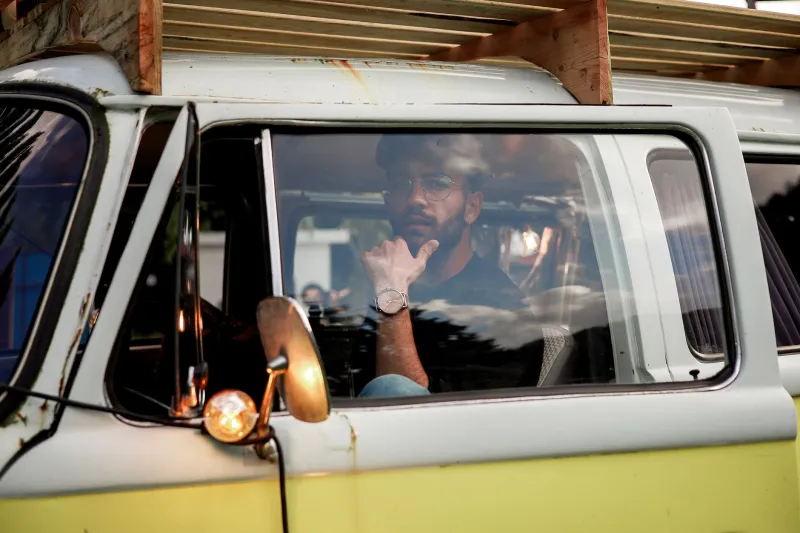
Spend enough time in van life communities and bohemian creative circles, and you'll find the nocturnal creatives everywhere — parked at the edge of a desert, their van windows glowing amber at 1 a.m. while everyone else in the campground has gone dark.
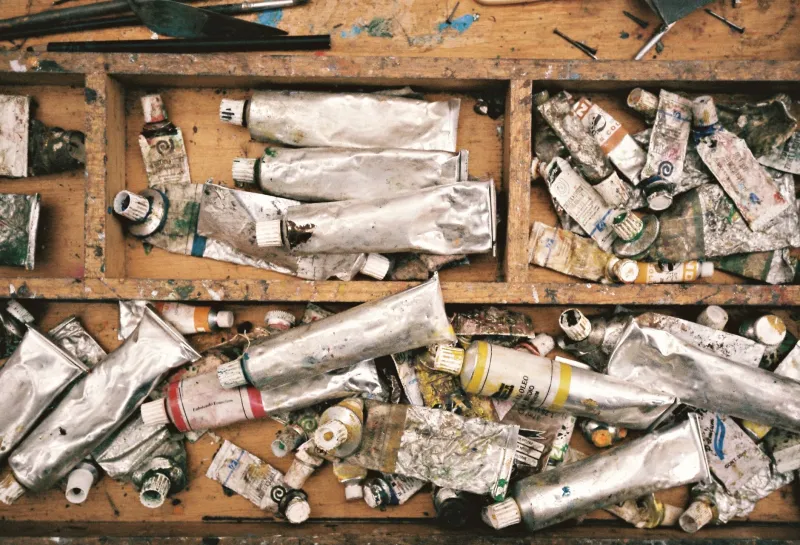
Take Mara, a painter and full-time van dweller who's been living on the road through the American Southwest for three years. She doesn't start her real work until after 10 p.m. "Daytime is for driving, for finding the spot, for living," she told us. "But the painting? That happens when it's just me and whatever's outside the window. 2 a.m. in the Sonoran Desert with coyotes going off in the distance — that's when I make the stuff I actually care about."
Or consider Theo, a musician and writer who spent two years traveling in a converted Sprinter before settling semi-permanently in Taos, New Mexico. He describes his late-night sessions as "the only time I'm not performing being a person for someone else." His most-streamed songs, he says, were all written between midnight and 4 a.m., "usually with bad coffee and no plan."
This tracks with something broader that nomadic and bohemian communities seem to understand: when you've already rejected the conventional schedule — the 9-to-5, the commute, the alarm clock set by someone else's needs — you naturally start to discover your actual rhythm. And for a lot of people, that rhythm runs late.
Building Your Own Midnight Practice
If you're someone who's always suspected that your best work lives on the other side of midnight but you've been guilted out of exploring it, here's permission and a loose framework.
Let the day wind down slowly. The transition into nocturnal creative work isn't a switch you flip. It's more like a tide coming in. Dim the lights earlier. Step away from screens that demand reaction — social media, news, anything with a comment section. Let your nervous system understand that the performance portion of the day is over.
Create a ritual that signals the shift. Bohemian creatives throughout history have had their rituals — the particular tea, the specific lamp, the worn notebook. Rituals aren't superstition; they're neurological shortcuts that tell your brain it's time to shift modes. Find yours.
Protect the silence fiercely. The magic of late-night creative hours is inseparable from the quiet. This isn't the time to put on a podcast or scroll while you "work." The silence is doing half the labor. Let it.
Don't force productivity metrics on it. You're not trying to produce a certain word count or finish a certain number of paintings. You're trying to access a state. Some nights you'll make something extraordinary. Some nights you'll just sit in the dark and think. Both are the practice.
Protect your sleep, too. This isn't a manifesto for sleep deprivation — that's a different and genuinely harmful road. This is about shifting when you sleep, not eliminating it. If you're working until 3 a.m., sleep until 10. Your body will thank you, and so will your creativity.
The Quiet Rebellion of Staying Up
There's something quietly radical about refusing to organize your creative life around other people's clocks. Productivity culture wants your best hours. It wants you optimized, scheduled, measurable. It wants you up at five so you can be useful to someone else by eight.
But the bohemian tradition — the tradition this whole wandering, sleeping-wild life is built on — has always understood that some of the most important work happens outside those hours. In the margins. In the dark. In the space after the world has given up on you for the night and left you alone with whatever's actually true.
Midnight doesn't belong to productivity culture. It belongs to the poets, the painters, the wanderers parked at the edge of something vast and quiet, making things that matter to them.
Stay up. See what clocks in.