Turn Off the GPS and Turn On Your Life: A Wanderer's Case for Getting Beautifully Lost

Somewhere between the third blue-dot reroute and the algorithmic suggestion to "try the highly rated café 0.2 miles away," something in us quietly dies. Not dramatically. Not all at once. Just a slow, almost imperceptible dimming of the instinct that once made us curious creatures — the part of us that used to follow a side street just because it curved in an interesting direction.
We've handed our sense of wonder over to a satellite. And most of us didn't even notice it happen.
But a growing number of wanderers — the kind who sleep in vans on BLM land and eat whatever the locals are eating and don't post their location until they've already left it — are doing something almost radical in the age of hyper-connectivity. They're getting lost. On purpose. Slowly. Joyfully. And they're reporting back that it's the most alive they've felt in years.
The Tyranny of the Known Route
Here's the thing about GPS: it's phenomenally good at getting you where you already decided to go. That's also its greatest flaw. It assumes the destination is the point. It treats the journey as inefficiency to be minimized. Every detour is a problem to be solved. Every unmarked road is a gap in the data.
But what if the gap is the data? What if the detour is actually the destination?
Travel psychologists — yes, that's a real field, and yes, they're having a moment — have started looking at what happens to the brain when we navigate by intuition rather than instruction. What they're finding is striking: open-ended exploration activates regions of the brain associated with creativity, emotional processing, and what researchers sometimes call "autobiographical memory consolidation." In plain language, getting lost helps you figure out who you are.
That tracks. Think about the trips you remember most vividly. Odds are, they weren't the ones where everything went according to plan.
What Intentional Disorientation Actually Looks Like
Let's be clear about something: getting lost on purpose doesn't mean being reckless. It's not about wandering into dangerous territory without water or a charged phone. It's a philosophy more than a survival strategy — a deliberate loosening of the grip on outcome.
In practice, it might look like this:
You're driving through rural Tennessee — or New Mexico, or the backroads of Vermont in October — and you see a hand-painted sign for a roadside market. You had a plan. You were making good time. You turn anyway. You spend forty-five minutes talking to a woman named Darlene who makes hot sauce from peppers she grows behind her doublewide and has opinions about hummingbirds that will genuinely rearrange something in your chest.
That's it. That's the whole practice.
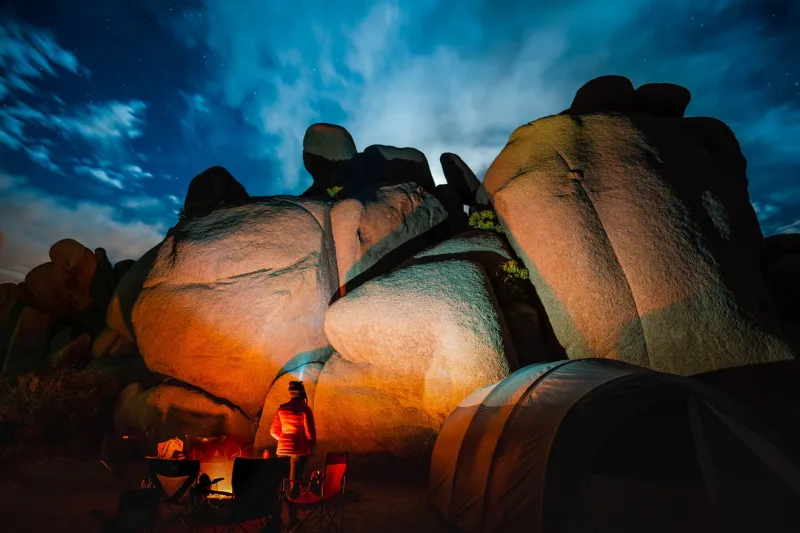
Or maybe it's bigger. Maybe it's leaving a city without a booked campsite, pointing your van toward the mountains, and trusting that you'll find a pull-off before dark. Maybe it's taking a train to a town you've never heard of and spending a weekend learning its rhythms — the diner that opens at five a.m., the park where old men play chess on Sunday mornings, the bar where someone's always got an acoustic guitar.
The shape of it doesn't matter as much as the intention: you are not trying to arrive anywhere specific. You are trying to arrive awake.
The People You Only Meet When You're Not Looking
There's a particular kind of human encounter that can only happen when you're not in a hurry to be somewhere else. Locals can smell an itinerary from a mile away. The traveler with the printed schedule and the restaurant reservation is, in a very real sense, already gone — already mentally at the next stop, the next photo op, the next checked box.
But the person who wanders in with open hands and no particular agenda? That person gets invited to things.
They get offered a seat at someone's tailgate. They get pointed toward the swimming hole that isn't on any app. They end up at a church potluck in Georgia or a powwow in South Dakota or a block party in East Austin that changes the way they think about community for the rest of their lives.
This is the underground economy of unplanned travel: the transactions are made in curiosity and repaid in connection. You can't manufacture it. You can only make yourself available to it by releasing your stranglehold on where you're supposed to be.
Relearning Curiosity Like a Muscle
We talk a lot about spontaneity like it's a personality trait — something you either have or you don't. But it's more accurate to think of it as a skill that atrophies without use. Most of us have spent years training ourselves out of it. School schedules, work calendars, social obligations — we've become extraordinarily good at filling every hour with intention. And somewhere along the way, we forgot how to just look around.
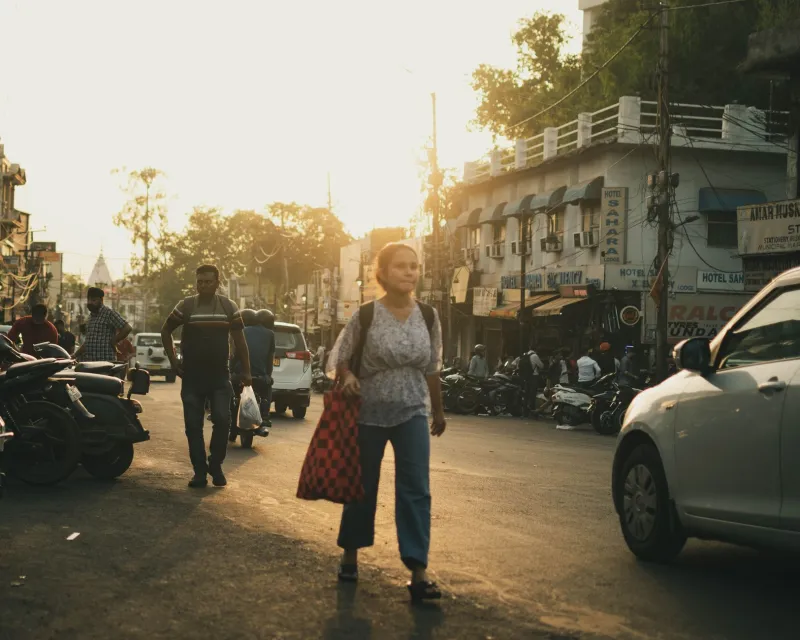
Getting lost is, at its core, a curiosity workout. It forces you to pay attention to your actual environment rather than the glowing map overlay of it. You start noticing things — the way a neighborhood changes block by block, the sounds a forest makes at different times of day, the particular quality of light in a town you've never been to and might never return to. You start reading the world instead of your phone.
And here's the part that surprises people: it gets easier. The anxiety of not knowing where you are — that low-grade panic that hits when the signal drops and the blue dot disappears — it fades. It fades because you realize, again and again, that you are okay. That you have always been okay. That the world is, in most places and most moments, quietly on your side.
The Recalibration Nobody Talks About
There's a version of yourself that exists only in unscheduled time. A version that makes decisions based on what feels interesting rather than what looks efficient. That version is not lost — that version is, arguably, the most found you'll ever be.
When you stop optimizing your movement through the world, something unexpected happens: you start to understand what you actually want. Not what your algorithm thinks you want based on past behavior, not what the travel influencer made look aspirational, not what your itinerary dictated. What you want, in your body, in this moment, on this road.
That's information you can't get from a five-star review. That's the kind of knowing that only comes from being a little lost, a little uncomfortable, and completely, gloriously present.
So the next time you're on the road — whether that road is a two-lane highway in the Texas Hill Country or a bike path winding through the Pacific Northwest — try this: close the app. Look up. Pick a direction that feels right for absolutely no logical reason.
See what finds you.
That's not getting lost. That's finally, fully arriving.