Put Down the Map: Why Planting Yourself in One Place Might Be the Wildest Thing You Ever Do
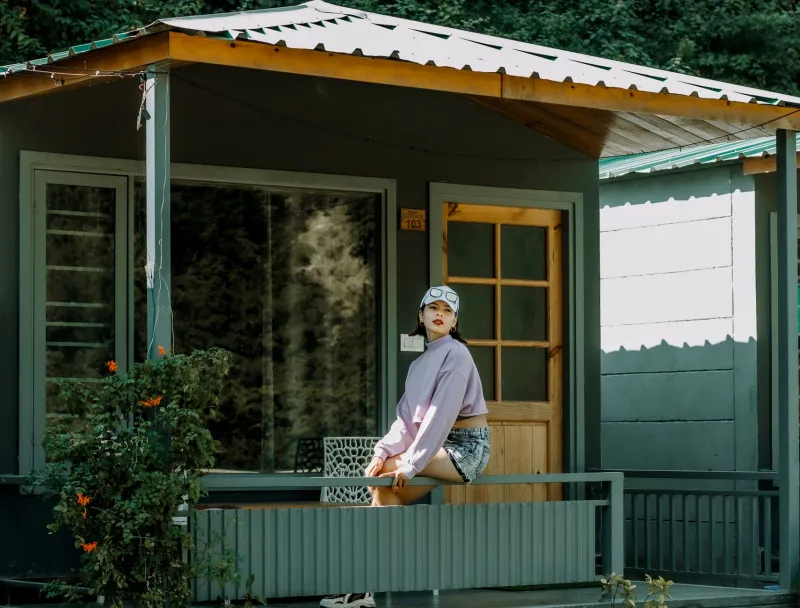
There's a particular kind of guilt that creeps in when you stop moving. You know the one. You're sitting on the porch of a rented cottage in the Blue Ridge Mountains, coffee going cold, watching the fog lift off the valley below, and somewhere in the back of your head a little voice pipes up: Shouldn't you be somewhere else by now?
For a certain type of person — the perpetually restless, the chronically curious, the ones who sleep better in unfamiliar rooms — staying still can feel like surrender. Like you've somehow failed at being yourself.
But here's the thing nobody tells you when you're deep in the scroll of your favorite van life account or pinning your fifteenth destination to a board you'll never actually finish: sometimes the most transformative thing you can do is stay.
The Myth of Perpetual Motion
Wandering culture — the good kind, the soul-fed kind we love around here — has always carried a paradox at its center. We romanticize the road because it promises discovery. New faces, new flavors, new versions of ourselves reflected back in unfamiliar light. And that promise is real. Movement does something to the brain. It shakes loose the calcified assumptions and lets you see with cleaner eyes.
But constant motion has a shadow side that doesn't make it into the highlight reel. When you're always arriving somewhere new, you never get past the surface. You taste the local taco spot but you never learn the cook's name. You hike the famous trail but you never discover the unmarked path the locals take in October when the crowds are gone. You collect impressions the way some people collect fridge magnets — a lot of them, spread thin, none of them particularly deep.
Depth takes time. And time, for the perpetually moving, is always the thing in shortest supply.
What Happens When You Actually Stay
A few years back, I spent six weeks in a small town in the Texas Hill Country — not a destination anyone would call buzzy, not the kind of place that makes travel magazines swoon. I'd landed there semi-accidentally, the way a lot of good things happen, and I kept extending my stay because something about the pace of it had gotten under my skin.
By week two, the woman who ran the feed store knew my name. By week three, I was being invited to a neighbor's backyard barbecue. By week five, I was learning to throw pottery at a studio run by a retired schoolteacher who'd lived in that county her entire life and had more stories in her than most people I'd met on three continents.
None of that would have happened if I'd blown through in a weekend. The richness wasn't in the place itself — it was in the accumulated time I spent inside it.
This is the gypsy paradox in action. The wanderer who pauses long enough to be known, to be folded into the fabric of a place, often ends up with a fuller experience than the one who covers twice the ground in half the time.
Slowness as a Skill
Slowing down isn't passive. Don't let anyone tell you it is. It's actually one of the harder things to practice, especially when your nervous system has been trained by years of novelty-chasing to treat stillness as stagnation.
But slowness, practiced intentionally, becomes its own kind of literacy. You start reading a place the way you'd read a book — not skimming, but actually sitting with the sentences, letting the meaning build. You notice the way the light changes in the late afternoon. You figure out which days the farmers market is actually worth getting up early for. You learn which roads flood in a rainstorm and which neighbors will wave back if you wave first.
This is what bohemian living at its best has always been about — not the aesthetics of wandering, but the practice of genuine engagement with the world. Sometimes that practice looks like a new country every month. And sometimes it looks like six weeks in a small Texas town learning to center clay on a wheel.
Temporary Roots Are Still Roots
One of the most liberating reframes I ever encountered came from a woman I met at a campsite in New Mexico. She'd been living out of her converted Sprinter for three years — fully committed to the road — but every winter she'd rent a casita in the same small community outside of Taos and stay for three months straight.
"People think that's cheating," she told me, laughing. "Like I've given up on van life or something. But those three months are the reason I can do the rest of the year. I come back to myself. I make things with my hands. I cook real food. I remember who I am when I'm not performing the adventure."
Temporary rootedness doesn't cancel out your wanderer credentials. It supports them. It gives you the ballast to keep moving without losing yourself in the motion.
Whether it's a cabin rental in Vermont for the winter, a sublet in a walkable neighborhood in New Orleans for a couple of months, or a friend's spare room in the Pacific Northwest while you figure out your next move — these pauses aren't interruptions to the story. They're often the most important chapters.
How to Actually Do It
If the idea of staying put makes you antsy, start small. Commit to three weeks somewhere instead of three days. Resist the urge to see everything on the first weekend. Give yourself permission to have a routine — a coffee shop you return to, a trail you walk more than once, a local class or workshop you see through to the end.
Let yourself be a regular somewhere. It's a quietly radical act.
Ask questions that require more than a one-sentence answer. Find the person in town who's been there the longest and buy them a drink. Learn one thing — one real, tactile, embodied thing — that you couldn't have learned in a weekend: a recipe, a craft, a dialect, a history.
And when the restlessness comes back (it will), don't immediately feed it. Sit with it for a day. See what it's actually asking for. Sometimes it's asking for movement. And sometimes it's asking for depth — which, if you're paying attention, is exactly what staying still can give you.
The Adventure That Waits When You Stop Running
The sleeping gypsy isn't lazy. She's not stuck. She's chosen, deliberately and with full awareness, to rest inside a moment long enough to actually live it.
The road will always be there. The next destination isn't going anywhere. But the version of you that gets forged in stillness — the one who learns a craft, builds a friendship, watches a full season change from the same front porch — that version has something the perpetually moving one never quite gets to develop.
So go ahead. Put down the map. Stay a little longer than feels comfortable. Let a place know you well enough to miss you when you leave.
That, it turns out, is its own kind of wild.