Stranger in Your Own Street: The Nomadic Trick That Turns Your Hometown Into Uncharted Territory
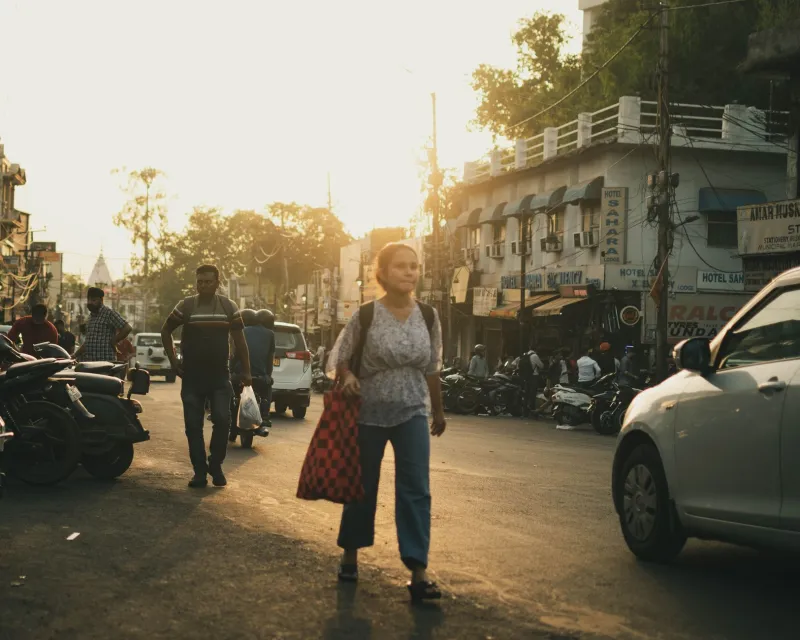
There's a particular kind of blindness that settles in when you've lived somewhere too long. The coffee shop on the corner stops being a place and becomes a landmark. The park down the road stops being wild and becomes a backdrop. You stop arriving somewhere and start just... passing through your own life.
Nomads know this feeling in reverse. They show up somewhere new and everything crackles — the signage feels foreign, the smells are unidentifiable, the whole world is a puzzle worth solving. That electric aliveness isn't a product of the place. It's a product of attention. And attention, unlike a plane ticket, is completely free.
So what happens when you apply that same nomadic hunger to the neighborhood you've been sleepwalking through for years?
Something quietly extraordinary, as it turns out.
The Philosophy of Intentional Invisibility
Becoming a ghost in your own hometown isn't about disappearing from your responsibilities or ghosting your friends (though honestly, sometimes). It's about dissolving the identity of resident and picking up the identity of traveler — even for just an afternoon.
Anthropologists call it defamiliarization. Philosophers call it beginner's mind. We'd just call it wandering with your eyes actually open.
The idea is simple: you already know too much about where you live. You know which coffee shop has slow WiFi, which intersection smells like exhaust, which neighbors let their dog bark until 11 pm. That accumulated knowledge is useful, sure — but it's also a cage. It keeps you from noticing the ivy creeping up the side of that old warehouse, the way the light hits the water tower at 5 pm, the mural someone painted on the back of the laundromat that you've never once faced the right direction to see.
Intentional invisibility means choosing, deliberately, not to be the expert. You become a tourist in your own zip code. A stranger on your own street.
Start With the Route You Never Take
The easiest entry point is also the most literal one: go somewhere different.
Not far. Just different. If you always turn left out of your front door, turn right. If you always drive to the grocery store, walk. If you always walk the same path through your neighborhood, pick a street you've never consciously explored and follow it until something surprises you.
This sounds almost embarrassingly simple, but try it once and you'll be stunned by what's been sitting two blocks away from you for years. A tiny plant nursery wedged between a tax office and a nail salon. A community bulletin board covered in handwritten flyers for open mics and dog-walking co-ops and neighborhood swap meets. A bench facing a view you somehow never noticed existed.
When you travel somewhere new, you walk slowly. You look up. You read the plaques on old buildings. You photograph things that locals consider completely unremarkable. Do that here. Do that now.
Eat Like You Just Got Off a Flight
One of the great joys of arriving somewhere unfamiliar is the food — specifically, the complete surrender to not knowing what to order or where to go. You wander until something looks good. You point at something on a menu you can't fully pronounce. You let the experience be a little awkward and a little uncertain and completely alive.
You can absolutely replicate this at home. How many restaurants in your city have you genuinely never considered walking into? How many food trucks have you passed without stopping? How many cuisines are represented within five miles of where you sleep that you've never once tried?
Pick a neighborhood you don't usually eat in. Give yourself no agenda, no Yelp pre-research, no comfort zone. Walk until something draws you in. Eat something unfamiliar. Sit at the counter instead of a table. Talk to the person making your food if they seem up for it.
You might find your new favorite spot. You might have a mediocre meal. Either way, you'll have had an experience instead of just a transaction.
Alter Your Clock, Alter Your World
Every city has multiple personalities, and most of us only ever meet one of them. The version of your hometown that exists at 6 am on a Sunday is completely different from the one you see at noon on a Wednesday or 10 pm on a Friday night.
Wanderers who move between places catch these shifts naturally — you arrive at odd hours, you're jet-lagged or road-weary, you end up seeing the city in states that residents rarely do. You can manufacture that same disorientation at home just by changing when you show up.
Set your alarm for sunrise and go sit somewhere outside. Not to exercise. Not to get somewhere. Just to watch your city wake up. Or stay out past midnight on a Tuesday and notice which parts of your neighborhood are still buzzing and which have gone completely quiet. The geography doesn't change, but the atmosphere does — and experiencing that shift makes the familiar feel genuinely mysterious again.
Carry a Traveler's Curiosity, Not a Resident's Certainty
Perhaps the deepest part of this practice is attitudinal. It's the difference between walking past a shuttered storefront and thinking that place closed ages ago versus wondering what was that place, actually? Who worked there? What happened?
Travelers ask questions. Residents assume they already have the answers.
Try keeping a small notebook — physical, not your phone — and jotting down things you notice or wonder about during your wandering. The old building with the bricked-over windows. The mural that keeps getting painted over and repainted. The garden growing in someone's front yard that looks like it belongs in another century.
You don't have to research all of it. Sometimes the wondering is enough. But occasionally, follow the thread. Look up the history of your neighborhood. Read about the people who lived there before you. Find out what that building used to be. Your city is full of stories that no travel guidebook will ever tell — because the people who write those books are just passing through, and you actually live there.
That's not a limitation. That's an advantage.
The Wildest Place You've Never Fully Explored
Here's the thing about wanderlust that nobody really talks about: it's not actually about distance. It's about depth. The most seasoned travelers will tell you that the richest experiences of their lives weren't always in the most exotic locations — they were in moments of genuine presence, wherever they happened to be standing.
Your hometown is not a consolation prize for people who can't afford to travel. It's an entire world that you've been given the extraordinary privilege of living inside, and most of us spend years barely scratching its surface.
Become the ghost. Disappear from your own habits. Wander the streets you've ignored. Eat the food you've never tried. Stay up past your bedtime to watch the city change its face. Ask questions you've been too comfortable to ask.
The sleeping gypsy doesn't always need to move to dream. Sometimes, the wildest journey is the one you take standing still — eyes wide open, certainties gently set aside, and the whole familiar world suddenly strange and shimmering and yours to discover all over again.