Sleep Ugly, Wake Up Free: What Roughing It at Night Actually Does to Your Brain
Let me tell you about the worst night of sleep I ever loved.
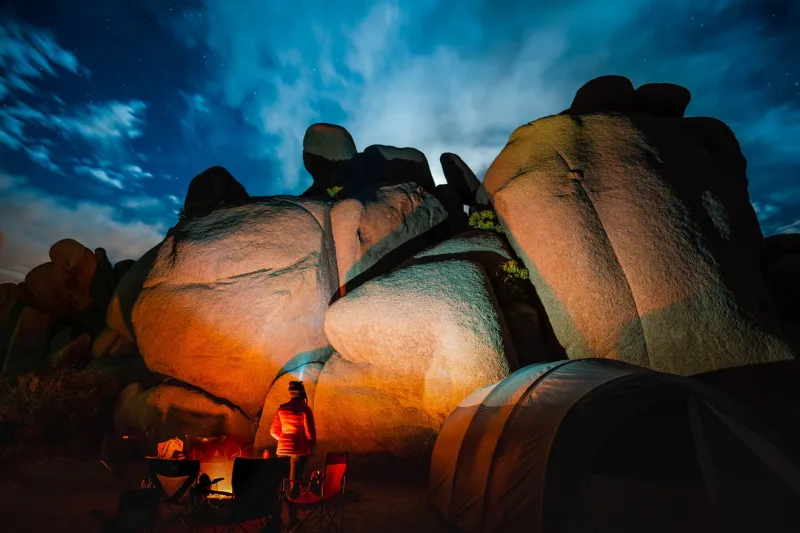
It was somewhere outside Moab, Utah — a pull-off most people blow past at 70 miles an hour without a second glance. I had a sleeping pad that had seen better days, a thin wool blanket, and a sky so full of stars it felt almost aggressive. The ground was uneven. Something kept skittering near my feet. I woke up four times.
And in the morning, I felt electric.
That experience cracked something open in me that no high-thread-count sheet set ever has. And it turns out, I'm not alone in that feeling — not by a long shot.
The Myth of the Perfect Sleep Environment
We've been sold a story about sleep. It goes something like this: the right mattress, the right blackout curtains, the right white noise machine, the right temperature (68 degrees Fahrenheit, in case you haven't heard), and then — only then — you will sleep well. The sleep industry in the United States is worth over $80 billion. That number should make you pause.
Because here's what that industry doesn't want you to think about: humans slept without any of that for roughly 300,000 years. On the ground. Near fire. In groups. Waking up at intervals. Listening to the dark.
Sleep researchers have actually studied this. A 2015 study published in Current Biology looked at three pre-industrial hunter-gatherer societies — the Hadza in Tanzania, the San in Namibia, and the Tsimane in Bolivia — and found that none of them slept the mythologized eight-hour uninterrupted stretch. They slept in shorter bouts, woke up naturally, and reported almost zero insomnia. Zero.
The perfect sleep environment might actually be making us worse at sleeping.
What Happens When You Take Comfort Away
Discomfort forces presence. That's the blunt truth of it.
When you're on a thin sleeping pad in the back of a van, or stretched out under a tarp in the Appalachian foothills, or crashed on a friend's floor in a city you've never visited before, your nervous system can't go on autopilot. You can't scroll your way into unconsciousness and then wonder why you feel foggy in the morning. You have to negotiate with sleep. You have to actually want it.
Neuroscientists call this process adaptation — the brain's extraordinary ability to recalibrate its expectations based on new input. When your environment changes, your brain pays closer attention. Sensory novelty literally increases neural engagement. You're more alert to your own body. You notice when you're cold. You notice when your hip aches. You notice, maybe for the first time in years, the exact moment you drift off.
That noticing? That's mindfulness, and it didn't cost you a meditation app subscription.
The Nomad Paradox
Ask anyone who's spent serious time living on the road — van dwellers, long-distance hikers, itinerant surfers bouncing between coastlines — and you'll hear a version of the same thing: I sleep better out here than I ever did at home.
On paper, this makes no sense. They're sleeping on foam cut to fit wheel wells. They're waking up to condensation dripping from a metal ceiling. They're dealing with campground noise, highway rumble, the occasional 3 a.m. freight train.
But there are a few things working powerfully in their favor.
Physical exhaustion is real and underrated. When you spend your days hiking, driving, hauling gear, and actually using your body, you earn your sleep in a way that sitting in front of a monitor for eight hours simply doesn't replicate. Your body knows the difference between tired and depleted, and depleted sleeps like a stone.
Natural light regulates everything. Van lifers and outdoor sleepers tend to wake with the sun and wind down when it gets dark. This isn't poetic — it's circadian biology doing exactly what it evolved to do. Melatonin production, cortisol rhythms, body temperature cycles — they all sync up when you stop fighting the light.
Anxiety has less room to grow. This one's subtle. When you're in an unfamiliar place, focused on the immediate physical reality of your environment, the looping mental chatter that keeps so many of us staring at the ceiling tends to quiet down. There's no room for 2 a.m. spiraling when you're listening to coyotes and trying to remember if you zipped the rain fly.
Sleeping Under Stars Is Not a Metaphor
I want to be specific here, because I think we sometimes let the romance of outdoor sleeping obscure the actual, tangible thing it does to you.
When you sleep outside — genuinely outside, not in a cabin or a glamping tent with a heated floor — your body is exposed to temperature gradients that mimic what sleep researchers call thermoregulatory cycling. Your core temperature drops as you fall asleep and rises as you move toward waking. Outside, this process happens more dramatically, more honestly. Many people who try it report falling asleep faster and waking up feeling sharper.
There's also something that happens to your sense of scale. Lying flat on the earth under an open sky has a way of dissolving the particular brand of self-importance that makes modern insomnia so persistent. Your problems don't get smaller, exactly — but they get proportional. The universe is enormous and indifferent and beautiful, and you are a small warm creature who needs to rest. That's actually a relief.
How to Start Sleeping Worse (On Purpose)
You don't have to quit your job and buy a van to start experimenting with this. Though, I mean — we're not going to talk you out of it either.
Start small. Sleep with the window open even when it's chilly. Try one night on a camping pad in your backyard, or on a friend's couch in a new city. Go on a weekend camping trip and resist the urge to bring every comfort item you own. Leave the sleep mask at home. Let the birds wake you up.
Notice what happens. Not just to your sleep quality, but to how you feel during the day. Pay attention to whether the days that follow uncomfortable nights feel more vivid, more grounded, more yours.
Because here's the thing about resilience — it doesn't build in comfort. It builds in the gap between what you expected and what you got, and the moment you decide to be okay with it anyway.
Rest as an Act of Trust
At its core, learning to sleep badly is really about learning to trust — trust that your body knows what it's doing, trust that you'll be okay without the perfect conditions, trust that rest will find you even when you're not engineering it into existence.
The wanderers and nomads who've figured this out aren't sleeping better because they've cracked some optimization code. They're sleeping better because they've stopped fighting. They've handed themselves over to the night — lumpy ground, unfamiliar sounds, and all.
That kind of surrender takes practice. But it starts with one night of sleeping badly and waking up to realize you're still here, still whole, and somehow — inexplicably — more alive than you were the day before.
The ground will hold you. It always has.