Stop Already: The Radical Power of Going Nowhere on Purpose
There's a particular kind of exhaustion that only nomads understand. It's not the good tired — not the satisfying ache of a long hike or the pleasant fog of a red-eye flight into somewhere new. It's the hollow, spinning fatigue that sets in when you've been moving so long that motion itself has stopped meaning anything. When every new town starts to blur into the last one. When you're technically somewhere but you feel completely, profoundly nowhere.
Here's the thing nobody puts on a travel mood board: the most experienced free spirits on the road aren't the ones who never stop. They're the ones who've learned, sometimes the hard way, exactly when to.
The Myth of Constant Motion
American hustle culture has done a real number on how we think about progress. We're conditioned to equate movement with ambition, stillness with stagnation. This bleeds into travel culture too — the glorification of the traveler who's always somewhere new, always racking up passport stamps, always in transit. More miles, more stories, more content.
But spend enough time talking to people who've been living unconventionally for years — the ones who've been on the road for a decade, not a gap year — and a different philosophy starts to emerge. They talk about anchoring. About choosing a place and letting it actually land on you instead of just passing through it. About the difference between visiting somewhere and genuinely being there.
Maria, who's been living out of a converted Sprinter van for six years and currently spends winters parked near Taos, New Mexico, puts it plainly: "I used to think slowing down meant I was losing momentum. Now I think it's how I actually find it."
What You Miss When You're Always Leaving
There's a specific kind of knowing that only comes with time. The way a neighborhood smells after rain. The name of the woman who runs the Tuesday farmers market. Which hiking trail gets the best light at 6 a.m. in October. The regulars at the corner coffee shop who eventually stop treating you like a tourist.
None of that comes from a weekend visit. It doesn't even come from two weeks. It comes from the deliberate, slightly uncomfortable act of staying put long enough to stop being a stranger.
When you're always in motion, you get breadth. You collect experiences the way some people collect souvenir magnets — lots of them, each one a little bit the same. But depth? Depth requires duration. It requires resisting the itch to move on when things start to feel familiar, because familiar is actually where the good stuff lives.
Seasoned nomads call this the "week three" phenomenon. The first week somewhere new is pure novelty. The second week, you're settling in. By week three, you've stopped performing tourism and started actually living — and that's when a place reveals itself in ways no guidebook captures.
Stillness as a Practice, Not a Failure
Learning to stop on purpose takes real discipline, especially when your whole identity is built around movement. There's a nagging voice that shows up — shouldn't you be somewhere else by now? Aren't you wasting time? — and it takes practice to recognize that voice as hustle culture wearing a hiking boot.
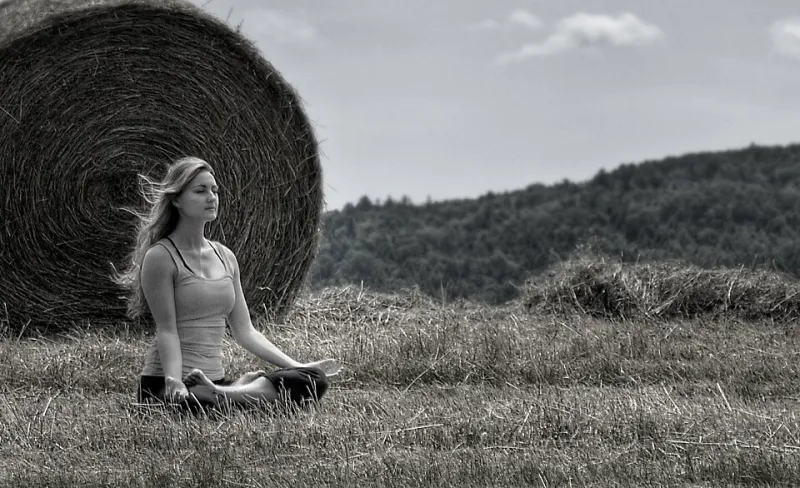
Intentional stillness isn't passive. It's a full-contact engagement with a single place, a single moment, a single version of yourself that you can't access when you're always mid-transition. Think of it like photography: you can take a thousand blurry shots while running, or you can stop, steady yourself, and capture something real.
Some nomads build this in structurally. A month on, a week still. Others listen to their body's signals — that creeping restlessness that paradoxically means it's time to stop rather than go. Others follow the weather, the work, or the feeling in their gut that says this place has more to give you.
The point isn't the method. The point is the intention.
The Places That Ask You to Stay
Anyone who's traveled long enough has experienced it: a place that just gets you. Maybe it's a small mountain town in Colorado where the pace feels like it was calibrated to your nervous system. Maybe it's a stretch of Gulf Coast where you wake up one morning and realize you've stopped counting days. Maybe it's a campsite in the Ozarks where you've been parked for three weeks and you still haven't figured out why you haven't left.
These places are information. They're telling you something about what you need — rest, roots, community, solitude, beauty — that constant motion was drowning out.
The bohemian tradition has always understood this, even when the broader culture hasn't. The original wanderers — artists, writers, musicians, seekers — weren't just drifters. They were people who moved until they found something worth staying for, and then they stayed, hard, until that place had given them everything it had. Then they moved again.
That rhythm — move, settle, absorb, move again — is a lot more sustainable, and a lot more interesting, than perpetual transit.
How to Actually Do It
If you're a chronic mover who's never quite managed to stay put, starting small helps. Give yourself a minimum stay — two weeks somewhere instead of five days. Remove the option of leaving early just because you're bored or itchy. Boredom, it turns out, is often just the gateway to something deeper.
Build rituals that anchor you to a place. A regular coffee spot. A morning walk route. A weekly market. These small, repeated acts create the texture of actual living rather than extended visiting.
And resist the urge to document everything in real time. Some of the richest experiences of stillness happen when you put the phone down and just let a place exist around you without performing your presence in it.
The Adventure of Arriving
Here's the beautiful paradox at the center of all of this: when you finally stop running toward the next thing, you often find that the place you're already in is more than enough. That the adventure wasn't somewhere ahead of you — it was right here, waiting for you to be still enough to notice it.
The sleeping gypsy isn't someone who gave up on wandering. She's someone wise enough to know that the deepest wandering sometimes happens when you close your eyes, stay exactly where you are, and let a place dream you into someone new.
So go ahead. Stop. Plant yourself somewhere. See what grows.
The road will still be there when you're ready.